
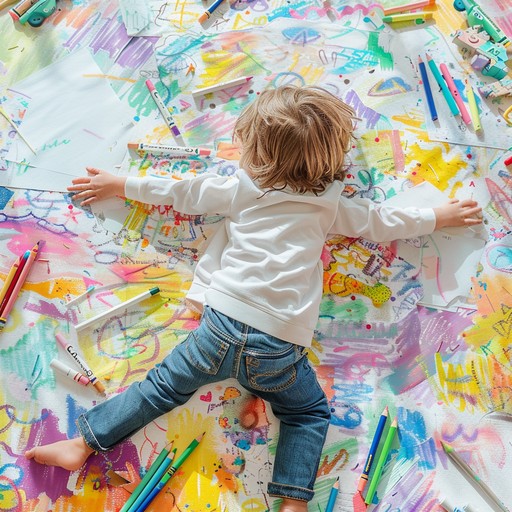

We live in an age of screens, structured activities, and packed schedules. But one of the most powerful things you can do for your child’s development costs nothing and requires very little planning — just let them play.
Creative, unstructured play is one of the most well-researched contributors to healthy child development. Here’s what the science says, and how you can use it to choose better toys for your little ones.
What is creative play?
Creative play is any form of play that allows children to use their imagination without rigid rules or a fixed outcome. It includes building with blocks, drawing, role-playing, painting, making up stories, and exploring materials like sand, water, or clay.
Unlike structured activities such as worksheets or guided classes, creative play gives children the freedom to lead — which is exactly what makes it so valuable.
5 ways creative play supports brain development
- Language and communication: When children role-play or narrate stories during play, they are actively building vocabulary, practising sentence structure, and developing communication skills.
- Problem-solving and critical thinking: Building a tower that keeps falling down teaches persistence and problem-solving. Children learn to test ideas, fail, adapt, and try again.
- Emotional regulation: Play is how children process feelings. Through role-play, they act out scenarios that help them make sense of the world and manage big emotions safely.
- Social skills: Playing with others requires negotiation, turn-taking, and empathy — all essential life skills that develop naturally through play.
- Fine motor development: Activities like drawing, threading beads, playing with playdough, and building with small blocks all strengthen the small muscles in the hands and fingers, preparing children for writing.
The best toys to support creative play
- Building and construction toys: Wooden blocks, LEGO, magnetic tiles.
- Art supplies: Crayons, paint, clay, craft kits.
- Role-play sets: Toy kitchen, doctor kit, tool set, dollhouse.
- Sensory toys: Kinetic sand, water play sets, playdough.
- Open-ended loose parts: Pebbles, fabric scraps, cardboard tubes — children are endlessly inventive with simple materials.
How much creative play does my child need?
Experts recommend that young children (ages 2–7) should have at least 1–2 hours of unstructured creative play every day. This doesn’t need to be elaborate or expensive. A set of blocks and a clear space is all it takes.
The key is to step back. Resist the urge to direct, correct, or improve their creations. The process matters far more than the product.
A note for parents
Creative play looks different from academic learning — it can seem messy, noisy, or aimless. But don’t be fooled. Those chaotic moments of imaginative play are exactly when your child’s brain is working its hardest.
Shop our curated range of open-ended, creativity-boosting toys at Toddlers Toysmart — chosen by parents, loved by kids.
